Home
Home
Why You Need to Enjoy Enjoy Enjoy Every Single Day

Pure enjoyment is often treated as a luxury or a byproduct of success, rather than a fundamental skill that requires cultivation. In the hyper-accelerated landscape of 2026, where digital immersion and algorithmic pacing dictate much of our cognitive load, the act of "enjoying" has become fragmented. To truly enjoy enjoy enjoy life—not just as a fleeting emotion but as a sustainable state of being—requires a conscious deconstruction of how we interact with pleasure, process, and possession.
Understanding the mechanics of enjoyment begins with its linguistic roots. The word itself, emerging from the Old French enjoier, literally means to give joy to or to rejoice in. It isn't a passive reception of external stimuli; it is an active engagement. When we repeat the imperative to "enjoy," we are essentially calling for a triple-layered approach to existence: the enjoyment of the moment, the enjoyment of the effort, and the enjoyment of the outcome.
The first layer: The art of immediate savoring
The most accessible form of enjoyment is the sensory one. This is what lexicographers define as getting pleasure from something—a meal, a movie, or a specific scent. However, in an era of constant distraction, this primary layer is often the first to be compromised. We eat while scrolling; we watch movies while checking notifications; we exist in beautiful spaces while planning for the next destination.
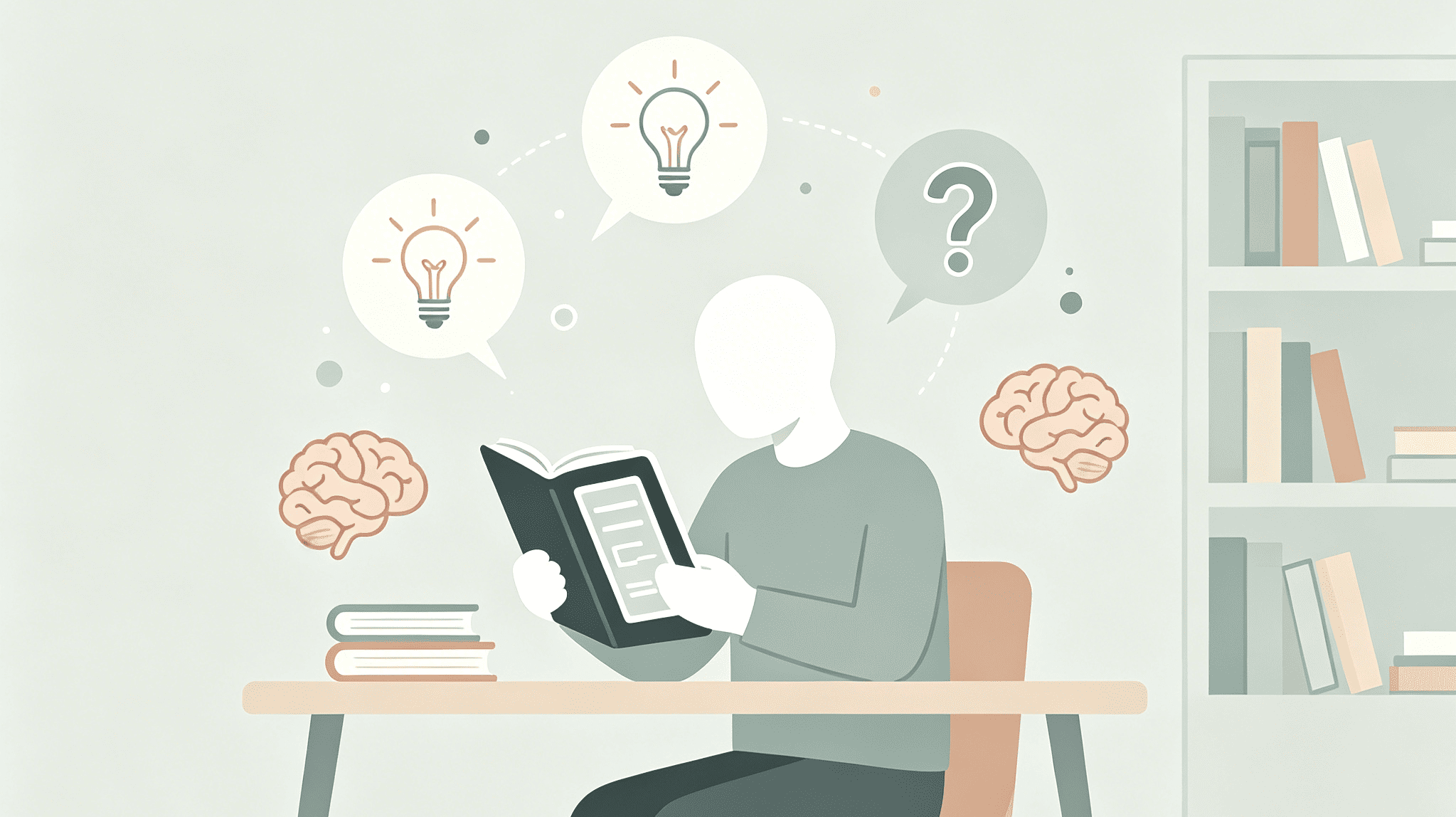
To reclaim this first layer of enjoyment, one must practice the science of savoring. Savoring is the deliberate effort to fully process and appreciate a positive stimulus. It involves prolonging the gap between the stimulus and our reaction. When you find yourself in a moment of potential joy, the goal is to expand that moment. This is not about indulgence, which can lead to desensitization, but about appreciation.
Psychologically, this acts as a counterweight to hedonic adaptation. Humans have a remarkable ability to get used to good things quickly, rendering them mundane. By focusing on the nuances—the specific texture of a morning coffee, the particular hue of the sky during a commute—we reset our baseline for pleasure. This first "enjoy" is about the here and now, ensuring that the senses are not just functioning, but are actively transmitting joy to the consciousness.
The second layer: Finding flow in the process
The second dimension of enjoyment is more complex: it is the ability to enjoy the doing, even when the doing is difficult. This is the transitive use of the verb—to enjoy performing an action. In professional and creative spheres, this is often described as "flow."
In 2026, the obsession with efficiency often robs us of the process. We focus so heavily on the "finish line" that the actual journey becomes a series of obstacles to be cleared. However, the most sustainable form of happiness comes from the intrinsic enjoyment of the work itself. This doesn't mean every task is inherently fun. Instead, it means finding a level of engagement where the challenge matches your skill level, leading to a loss of self-consciousness.
Enjoying the process requires a shift in perspective. It involves relishing the friction of a problem-solving session or the physical fatigue of a workout. When you enjoy the process, you are no longer a hostage to the result. If the result is delayed or different than expected, the time spent was not "wasted" because the experience itself provided value. This second layer is what builds resilience. It transforms the "grind" into a series of meaningful engagements, allowing for a deep sense of satisfaction that outlasts any single achievement.
The third layer: The state of possession and privilege
The third meaning of enjoyment is perhaps the most overlooked in casual conversation: to have the benefit of something, or to experience a particular condition. We speak of someone "enjoying excellent health" or a community "enjoying a high standard of living." This is enjoyment as a status—a long-term state of being that provides a foundation for the other two layers.
Enjoying your life at this level means recognizing and maintaining the systems that support your well-being. It is the quiet appreciation of a stable environment, the possession of good health, or the exercise of certain rights and freedoms. This form of enjoyment is less about "feeling" and more about "having" and "being."
In our current societal context, we often take these foundational elements for granted until they are threatened. True enjoyment at this level involves a regular audit of one's life. It is the realization that being able to pursue one's interests is, in itself, a form of high-level enjoyment. This structural joy provides the security needed to explore sensory pleasures and demanding processes without the interference of survival-level anxiety.
The barriers to triple enjoyment in 2026
Why is it so difficult to synchronize these three layers? The primary culprit is the "comparison economy." Even as we attempt to enjoy our own lives, we are constantly bombarded with curated versions of others' enjoyments. This creates a cognitive dissonance where our current reality feels insufficient compared to the digitized ideal.
Furthermore, the "optimization trap" suggests that every moment of enjoyment must also be productive. We are encouraged to turn our hobbies into side hustles and our relaxation into "recovery" for more work. This commodification of joy strip-mines the actual experience, leaving us with the shell of an activity but none of the nourishment. When enjoyment becomes a task on a to-do list, it ceases to be enjoyment.
Another significant barrier is the decline of "empty time." Enjoyment requires space. It requires the brain to be off-duty for long enough to actually register pleasure. The 2026 digital landscape is designed to fill every micro-moment of boredom with content, leaving no room for the natural emergence of joy. Boredom is often the precursor to deep enjoyment; it is the silence that makes the music audible.
Rebuilding the capacity for joy
If the capacity to enjoy enjoy enjoy has been eroded, it can be rebuilt through intentional practice. This is not a search for grand, life-changing events, but a recalibration of how we perceive the ordinary.
The Enjoyment Audit
One effective method is to conduct a weekly "Enjoyment Audit." Instead of tracking your productivity or your expenses, track your moments of genuine engagement. Ask yourself:
- Sensory: What did I taste, see, or feel today that I actually paused to appreciate?
- Process: Which task was I so involved in that I forgot to check the time?
- State: What foundational benefit did I use today (health, safety, community) that I usually ignore?
This practice shifts the brain's filtering mechanism from a focus on lack to a focus on presence. It moves the concept of "enjoy" from a vague wish to a tangible metric of life quality.
The Power of Low-Stakes Hobbies
To strengthen the second layer of enjoyment, it is helpful to engage in activities where you have no intention of becoming an expert or making money. Low-stakes hobbies—gardening, sketching, amateur astronomy—allow you to enjoy the process without the pressure of performance. They provide a safe space to fail, to experiment, and to simply exist in the flow. In these moments, the ego is sidelined, and the pure act of doing takes center stage.
Protecting Your Foundational Joy
Finally, to maintain the third layer, one must be a fierce protector of their foundational health and peace. This might mean setting stricter digital boundaries, prioritizing sleep over late-night scrolling, or investing more time in face-to-face relationships. These aren't just "healthy habits"; they are the infrastructure of enjoyment. Without a stable foundation, the sensory and process-based joys will always feel precarious.
The shift from 'Doing' to 'Being'
Ultimately, the command to enjoy enjoy enjoy is a call to integrate these disparate parts of the human experience. It is a reminder that life is not a problem to be solved, but a reality to be experienced. We are not just biological machines optimized for output; we are conscious entities capable of profound delight.
In the coming years, as automation and artificial intelligence handle more of our logistical and analytical burdens, the uniquely human ability to "enjoy" will become our most valuable asset. The machines can calculate, they can predict, and they can produce—but they cannot enjoy. They cannot feel the warmth of the sun or the satisfaction of a hard-won skill.
By focusing on the triple layers of enjoyment, we reclaim our humanity. We move away from the frantic pace of modern life and toward a more rhythmic, intentional way of being. This doesn't require a change in circumstances as much as it requires a change in attention. Whether you are at work, at home, or anywhere in between, the opportunity to enjoy is always present. It is in the coffee you are drinking, the task you are performing, and the very health that allows you to read these words.
Don't wait for a special occasion to activate this mindset. The special occasion is the fact that you are here, experiencing the world in all its complexity. Take the time to settle into your life. Engage with your senses. Commit to your processes. Appreciate your state. It is time to truly, deeply, and consistently enjoy enjoy enjoy.
-
Topic: ENJOY | English meaning - Cambridge Dictionaryhttps://dictionary.cambridge.org/dictionary/english/enjoy?q=Enjoy
-
Topic: ENJOY Definition & Meaning - Merriam-Websterhttps://www.word.com/dictionary/enjoy
-
Topic: Enjoy definición y significado | Diccionario Inglés Collinshttps://www.collinsdictionary.com/es/english/enjoy