Home
Home
Stop Treating Your 2b Hair Type Like It's Straight
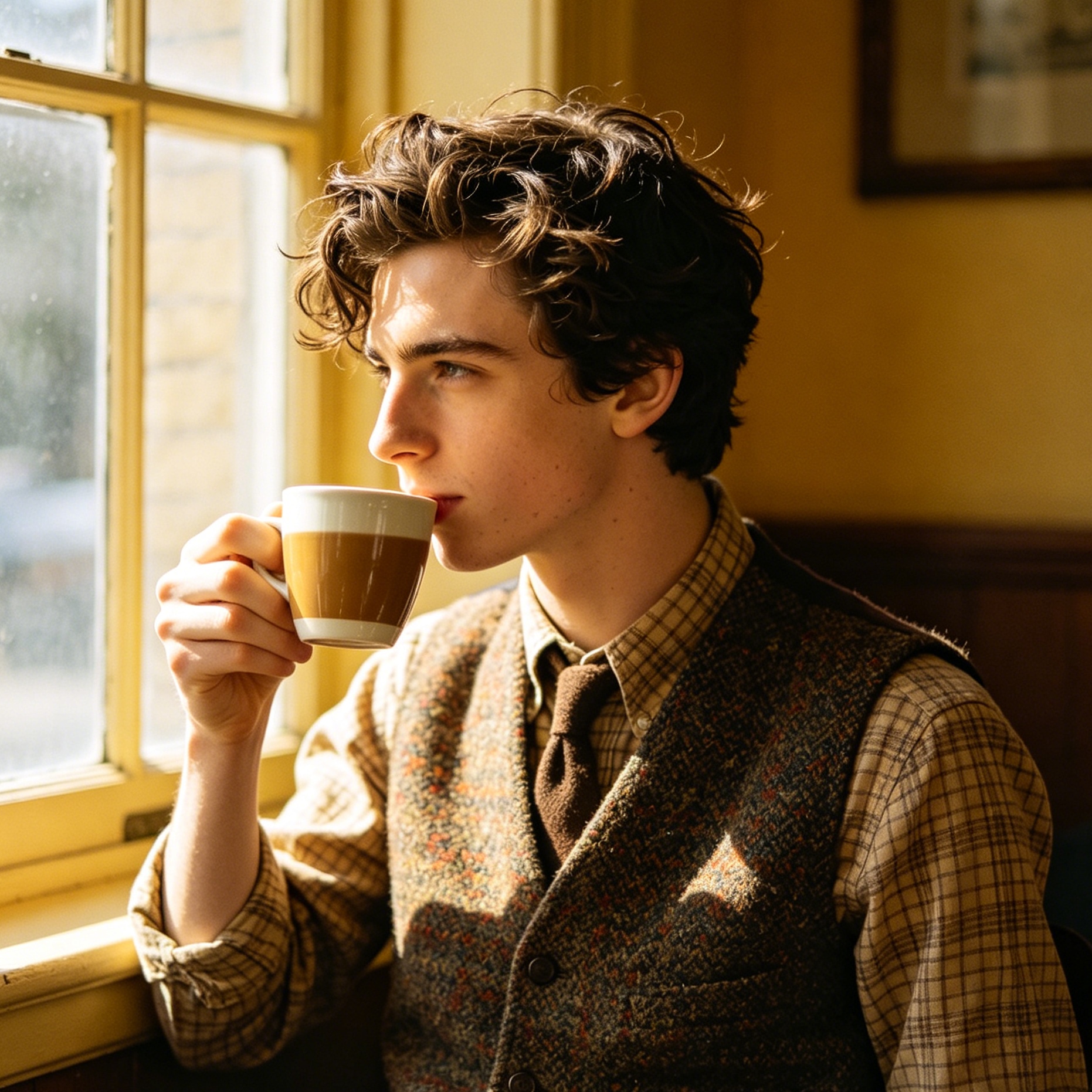
Identifying your hair pattern is often the first step toward a functional relationship with your reflection. For those with the 2b hair type, this journey is frequently marked by years of confusion. Your hair isn't exactly straight, yet it doesn't form the tight ringlets seen in classic curly hair. It sits in that elusive middle ground of the wavy spectrum—a texture that is as beautiful as it is temperamental.
Defining the 2b Hair Type: The S-Curve and the Root Struggle
The 2b hair type is characterized by a distinct S-shaped wave pattern that typically begins to manifest from the mid-lengths down to the ends. Unlike 2c hair, which has waves starting almost directly at the scalp, 2b hair lies relatively flat at the crown. This structural reality often leads to a common complaint: a lack of volume at the roots paired with significant volume (and sometimes frizz) at the bottom.
In terms of texture, 2b strands are generally medium-thick. They aren't as fine or fragile as 2a waves, but they lack the coarse, robust diameter of 2c or type 3 curls. This medium texture makes the hair relatively resilient to heat styling but also makes it prone to tangling. Because the waves form a consistent S-shape, the hair's natural oils have a harder time traveling from the scalp to the tips, leading to ends that feel chronically dry while the roots remain oily.
2b vs. 2a and 2c: Spotting the Nuances
Misclassification is the primary reason why many wavy-haired individuals use products that either weigh their hair down or fail to provide enough definition.
- Type 2a hair is fine and has a very loose, tousled texture. It lacks a definitive S-shape and is very easy to straighten.
- Type 2b represents a visible commitment to the wave. The S-pattern is consistent and requires effort to blow out straight. It is the "classic beach wave" that many try to replicate with salt sprays.
- Type 2c is the threshold to curly. The waves are tighter, start at the root, and are often interspersed with actual ringlets. 2c hair is significantly coarser and more prone to extreme frizz than 2b.
It is important to note that most people do not have a single hair type across their entire head. You likely possess a canopy of 2b waves with 2a sections underneath near the nape, and perhaps a few 2c tendrils framing your face. Treating the head based on the dominant 2b pattern is usually the most effective strategy.
The Science of Frizz in 2b Waves
Frizz is not a hair type; it is a condition caused by a lack of moisture or an open hair cuticle. For 2b hair, frizz is the primary antagonist. Because the wave pattern creates bends in the hair shaft, the cuticle layers (the shingle-like outer covering of the hair) are slightly raised at those points.
When the environment is humid, the hair seeks moisture from the air. The water molecules enter the gaps in the raised cuticles, causing the hair shaft to swell and lose its defined S-shape. This results in the "poof" effect. Conversely, in dry climates, 2b hair loses its internal moisture rapidly, leading to brittle, straw-like waves that won't clump together. Achieving the perfect 2b look requires a delicate balance of hydration (moisture) and protein (strength).
The 2b Care Ritual: A Step-by-Step Methodology
1. The Pre-Shampoo Treatment (Pre-Poo)
Since 2b hair is prone to mid-length tangles, a pre-shampoo treatment can be a game-changer. Applying a lightweight oil or a deep conditioner to dry hair 20 minutes before washing creates a protective barrier. This prevents the shampoo from stripping away too much moisture and makes the detangling process significantly easier once you hit the shower.
2. Strategic Cleansing
Scalp health dictates hair quality. For 2b hair, a regular routine of a sulfate-free, protein-rich shampoo is ideal. However, because wavy hair is easily weighed down by product buildup and natural sebum, a clarifying shampoo should be used every four to five washes. This "resets" the hair, removing minerals from hard water and residual styling polymers that cause waves to look limp and greasy.
When washing, focus solely on the scalp. Massaging the scalp stimulates blood flow and removes debris. Do not pile your hair on top of your head and scrub the lengths; the suds running down the hair are sufficient to clean the waves without causing mechanical damage or tangles.
3. Conditioning and the "Squish to Condish" Technique
Conditioner should only be applied from the ears down. Applying it to the roots will inevitably flatten 2b hair, destroying any hope of volume.
A popular and effective method for 2b hair is "Squish to Condish." After applying conditioner to soaking wet hair, cup water in your hands and squish the hair upward toward the scalp. This pulsing motion forces the moisture and conditioner into the hair shaft and encourages the waves to clump into their natural S-shape while still dripping wet.
4. The Art of Detangling
Never brush 2b hair when it is dry. This will shatter the wave pattern and create a cloud of frizz. Instead, detangle in the shower while the hair is saturated with conditioner. Use a wide-tooth comb or a specialized flexible detangling brush. Start from the ends and work your way up to the mid-lengths to avoid snapping the strands.
Styling 2b Waves for Maximum Definition
The goal with 2b styling is to enhance the natural S-curve without adding so much weight that the waves elongate into 2a-like strands.
The Soaking Wet Application
Styling products should be applied while the hair is still very wet—nearly dripping. This allows the product to distribute evenly. For 2b hair, a lightweight volumizing foam or a liquid-based curl enhancer is often superior to heavy creams. Creams are designed for type 3 and 4 hair and can make 2b waves look stringy and oily.
Micro-Plopping vs. Plopping
While the "plopping" technique (wrapping hair in a T-shirt) works for many, 2b hair often responds better to "micro-plopping." Use a microfiber towel to gently scrunch the hair upward to remove excess water after the product has been applied. This removes the weight of the water quickly, allowing the waves to spring up before the drying process begins.
Diffusing for Volume
Air drying is the gentlest method, but it often leaves 2b hair looking flat at the roots. Using a hair dryer with a large diffuser attachment on low heat and low speed can transform the result.
- Pixie Diffusing: Place the hair in the diffuser bowl while the dryer is off, move it up to the scalp, and then turn it on. This minimizes frizz-inducing air movement.
- Hover Diffusing: Hold the diffuser an inch away from the hair to set the "cast" of the styling gel or foam before touching the waves. This ensures the definition stays locked in.
The Importance of the Right Haircut
A 2b hair type trapped in a blunt, one-length haircut will almost always succumb to the "triangle hair" effect—flat on top and wide at the bottom. To combat this, graduation and layers are essential.
Long, round layers help remove the bulk from the bottom and allow the mid-length waves to bounce. Face-framing layers can also encourage the hair around the forehead to take on more shape. Most stylists recommend a length between the jaw and the shoulder for 2b hair; anything longer tends to weigh the waves down, making them appear straighter than they actually are.
Nighttime Maintenance: Preserving the Wave
If you find that your waves look great on day one but disappear by the next morning, your sleep environment is likely the culprit. Traditional cotton pillowcases create friction, which ruffles the hair cuticle and absorbs moisture.
Switching to a silk or satin pillowcase allows the hair to glide smoothly as you move. Additionally, the "pineapple" method—gathering the hair in a very loose, high ponytail on top of your head with a silk scrunchie—prevents the waves from being crushed under the weight of your head.
Seasonal Adjustments for 2b Hair
Your 2b hair will behave differently in April than it does in October. In 2026, as we see more extreme weather fluctuations, adaptability is key.
- In Humid Seasons: Increase the use of hard-hold gels. These create a "cast" (a crunchy layer) around the hair that acts as a shield against atmospheric moisture. Once the hair is 100% dry, you can "scrunch out the crunch" to reveal soft, defined waves.
- In Dry/Winter Seasons: Focus on humectants and leave-in conditioners. If the air is dry, you must provide the moisture so your hair doesn't try to find it elsewhere.
Common Mistakes to Avoid
- Over-Conditioning: Because 2b hair feels dry, many people overcompensate with heavy masks. This leads to "hygral fatigue," where the hair becomes too soft, loses its elasticity, and won't hold a wave.
- Using Heavy Oils: Pure coconut oil or heavy shea butter is often too much for 2b waves. They coat the hair rather than penetrating it, leading to a greasy appearance.
- Touching Hair While Drying: Once you have applied your product and scrunched, do not touch your hair until it is completely dry. Every time you touch a damp wave, you create frizz.
The Protein-Moisture Balance
If your 2b waves are limp, stretching, and won't hold their shape, you likely need protein. Protein strengthens the hair shaft and helps it maintain the "memory" of the S-pattern. Look for products containing hydrolyzed silk, keratin, or wheat protein.
If your hair feels rough, tangles easily, and snaps when stretched, you have an excess of protein and need moisture. Deep conditioners with aloe vera, glycerin, and hyaluronic acid can restore the softness.
Living with 2b Hair in 2026
Modern hair philosophy has moved away from the pursuit of "perfect" uniform curls. The beauty of the 2b hair type lies in its relaxed, effortless aesthetic. It is a texture that embodies movement. By understanding the structural needs of your waves—lightweight hydration, strategic volume at the roots, and protection against friction—you can stop fighting your natural pattern and start showcasing its unique S-shaped brilliance.
Whether you are opting for a shaggy bob or long, beachy layers, the key is consistency. A 2b routine isn't about complexity; it's about choosing products that respect the medium weight of your strands and techniques that encourage the wave to live its best life. Embrace the occasional stray hair, the slight asymmetry of the waves, and the lived-in volume. That is the true essence of 2b hair.
-
Topic: Type 2B Hair: What It Is and How to Care for Ithttps://www.byrdie.com/type-2b-hair-5324012
-
Topic: 2b Hair Type: Wavy Hair Texture | DevaCurlhttps://www.devacurl.com/us/curl-101/2b-hair
-
Topic: How should I care for my type 2B hair?https://help.curlsmith.com/en-US/how-should-i-care-for-my-type-2b-hair-838121